

.png)
Mount Dora, Flórida
Aparelhos não são algo que se compra uma única vez. Eles exigem consultas a cada seis ou oito semanas durante cerca de dois anos, e o resultado final depende de quem está na sala em todas elas.
Portanto, há duas coisas que vale a pena esclarecer antes de agendar qualquer coisa em Mount Dora: quanto custa e com quem você se consultará pelos próximos dois anos.
Aparelhos ortodônticos no consultório de Mount Dora
$4.550 metálico ou cerâmico transparente
As entradas começam em $300, o que equivale a cerca de $177 por mês durante 24 meses com 0% de juros.
O seu valor pode ser menor após a aplicação do benefício do seguro. O exame e o escaneamento digital são gratuitos, e você sai com o seu orçamento por escrito, independentemente de decidir iniciar o tratamento ou não.
A resposta para a segunda pergunta é o Dr. Robert Ogden. Ele abriu o consultório de Mount Dora na North Donnelly Street em 2006 e atende aqui desde então, tempo suficiente para que pais que usaram aparelho nesta clínica tragam agora os seus próprios filhos.
Ele concluiu sua residência em ortodontia na Universidade da Flórida em 1994 e, desde então, dedica-se exclusivamente à ortodontia. Ele é o único ortodontista em todas as três unidades da Ogden, portanto, a pessoa que planeja o seu caso é a mesma que coloca os braquetes e a que os remove.
Vale a pena ler antes de assinar qualquer coisa, porque é nessas cinco linhas que as expectativas e a realidade geralmente se desencontram.
Tudo nessa lista faz parte da ortodontia normal. A diferença é ter isso diante de você antes de se comprometer, em vez de descobrir no nono mês.
A maioria dos adolescentes começa o tratamento com aparelho assim que dentes permanentes suficientes nascem. Isso ocorre entre os onze e os quatorze anos, dependendo do desenvolvimento do seu filho e não da idade cronológica.
O que os pais geralmente querem saber é o lado prático. As consultas ocorrem a cada seis ou oito semanas e a maioria é rápida. O consultório fica aberto de segunda a sexta-feira, das 8h às 17h, e a recepção trabalha de acordo com o horário escolar sempre que possível.
Os braquetes metálicos ainda são a escolha da maioria dos adolescentes, em parte porque as borrachinhas coloridas são a parte que eles mais esperam. A cerâmica transparente custa o mesmo aqui, então um adolescente que prefere que o aparelho não seja a primeira coisa que as pessoas notam não está pedindo para você gastar mais.
Geralmente, sim. A Associação Americana de Ortodontistas recomenda a primeira avaliação ortodôntica por volta dos sete anos de idade, e a maioria das crianças de sete anos que nos visitam ainda não precisa de nenhum tratamento.
O objetivo dessa consulta é identificar o pequeno número de casos em que esperar torna o problema mais difícil de resolver. Certas mordidas cruzadas e mordidas abertas, dentes que não estão nascendo onde deveriam ou dentes da frente que se projetam o suficiente para sofrerem lesões facilmente.
Se o seu filho não estiver em nenhuma dessas situações, o Dr. Ogden informará e o colocará em um cronograma de acompanhamento. Essas consultas de monitoramento são gratuitas.
Se o seu filho pratica esportes de contato, mencione isso na consulta para que um protetor bucal que se ajuste sobre os braquetes seja providenciado antes da temporada, em vez de esperar pelo primeiro braquete quebrado.
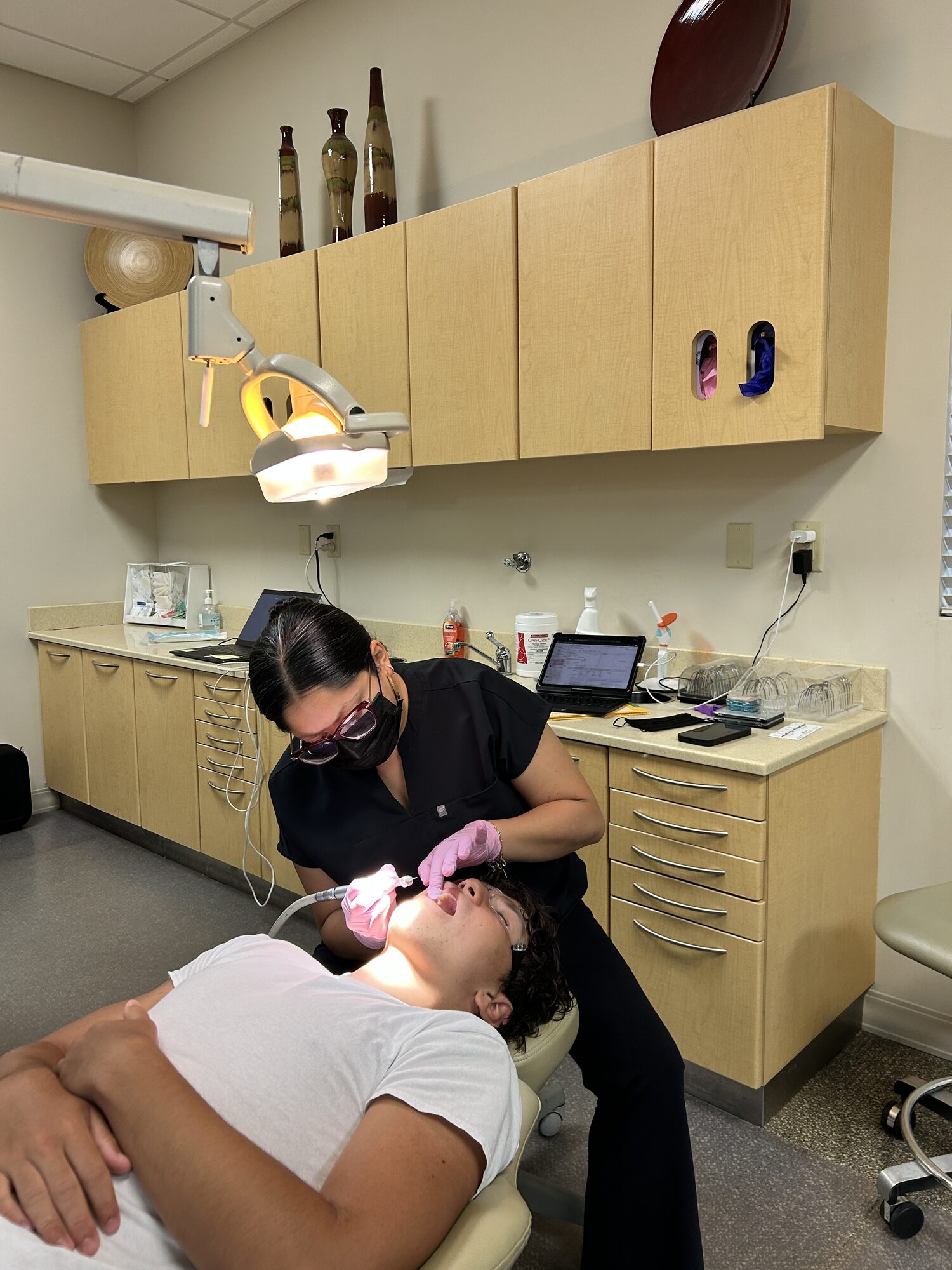
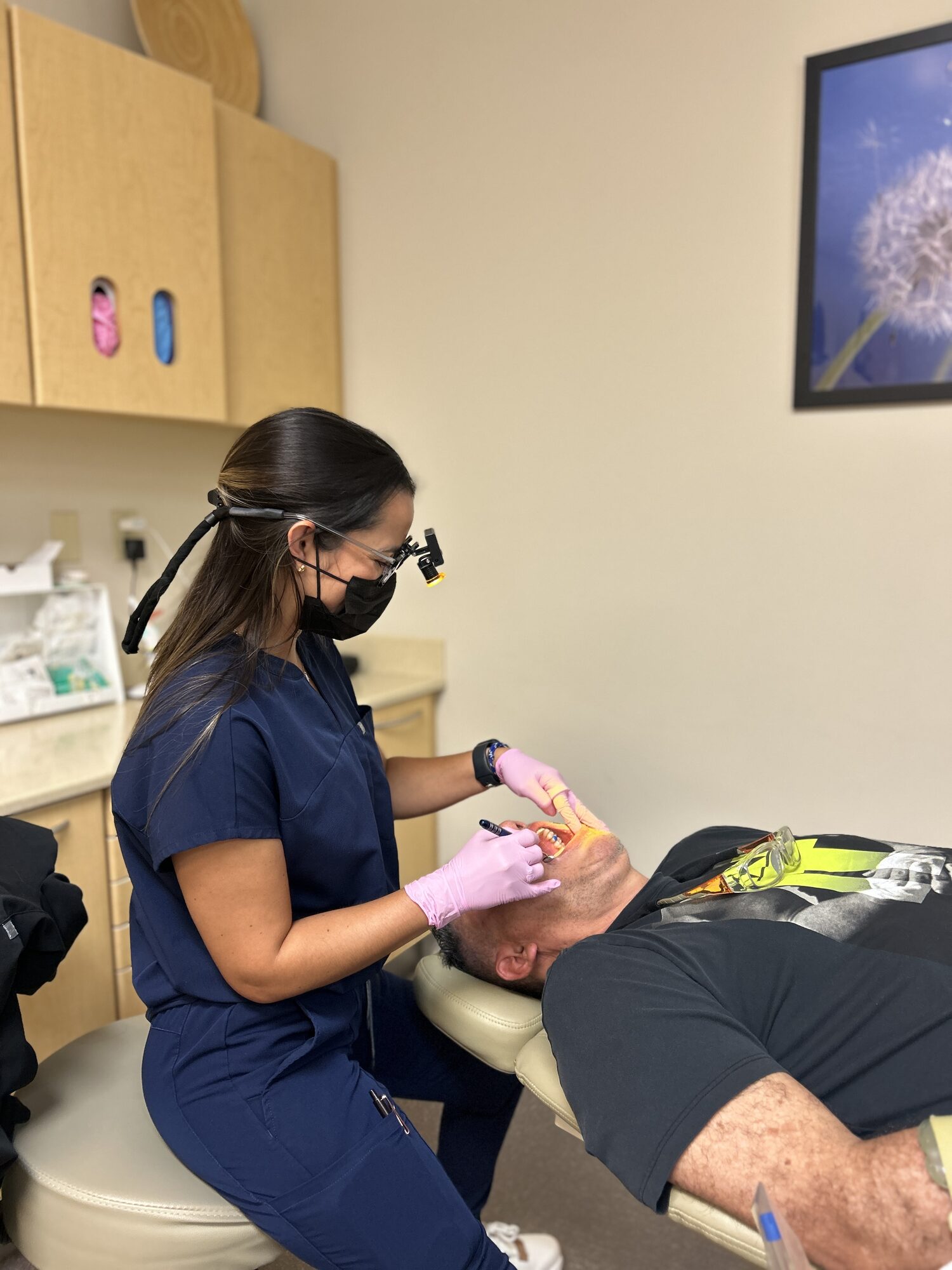
Os adultos representam uma parcela maior deste consultório do que a maioria das pessoas imagina, e os motivos são recorrentes.
Dentes que se movimentaram após o uso da contenção ter sido interrompido silenciosamente. Dentes inferiores da frente que ficaram um pouco mais apinhados a cada ano durante a casa dos trinta. Uma mordida que começou a desgastar o esmalte de forma desigual, o que um dentista clínico geral geralmente identifica primeiro.
Ou ter pensado nisso por quinze anos e decidido que é hora de resolver de vez.
Mecanicamente, funciona da mesma forma aos cinquenta ou aos quinze anos. A diferença é o ritmo. O osso que já terminou de crescer se remodela mais lentamente, o que pode adicionar alguns meses ao caso, e a maioria dos adultos aqui prefere o aparelho cerâmico em vez do metálico. O cerâmico custa os mesmos $4.550.
O que determina se um adulto pode começar o tratamento é a condição das gengivas e do osso que sustenta os dentes, não a idade. O Dr. Ogden avalia isso na consulta e dirá claramente se algo precisa ser tratado antes.
Esse é um dos motivos mais comuns pelos quais os adultos nos procuram, e não é um sinal de que o primeiro tratamento falhou. Os dentes se movimentam por toda a vida. O aparelho de contenção é a solução completa para isso, e a recidiva quase sempre ocorre porque o uso da contenção foi interrompido.
Casos de recidiva costumam ser mais rápidos e baratos de corrigir do que o tratamento original. Se a movimentação for pequena, o Invisalign em Mount Dora por $2.495 para retoques pode ser o suficiente, e esse valor é definido na mesma consulta gratuita.
Um valor único, orçado antes do início de qualquer procedimento, cobrindo todo o tratamento em vez de um número específico de meses.
| Tratamento | Valor | Geralmente escolhido por |
|---|---|---|
| Aparelho metálico | $4.550 | A maioria dos casos, incluindo correção de mordida complexa e pacientes mais jovens |
| Aparelho cerâmico transparente | $4.550 | Adultos e adolescentes mais velhos que desejam braquetes menos visíveis |
| Invisalign Touch-Up | $2.495 | Movimentação leve, geralmente concluída em menos de seis meses |
| Invisalign Comprehensive | $4.895 | Tratamento completo, três refinamentos incluídos |
Os valores são apresentados antes do seguro. O seu pode ser menor após a aplicação do benefício.
Aqui, o aparelho de cerâmica transparente tem o mesmo preço do metálico. As tabelas de preços costumam colocar a cerâmica algumas centenas de dólares acima do metal, portanto, neste consultório, a opção mais discreta não custa mais caro.
Contenções de reposição após o primeiro par, com valores a partir de $225.
Tratamentos odontológicos necessários antes da colocação do aparelho, como extrações ou restaurações, são cobrados pelo profissional que os realiza.
Muitos planos odontológicos oferecem um benefício ortodôntico com um limite vitalício, geralmente entre $1.000 e $3.000 por paciente. Ele é aplicado uma única vez, e não anualmente, e a cobertura para adultos é frequentemente diferente da cobertura para crianças no mesmo plano.
Este consultório trabalha regularmente com Delta Dental, DeltaCare USA, Cigna, MetLife, United Healthcare, Ameritas e The Standard.
A cobertura varia conforme a empresa, mesmo dentro da mesma operadora. Traga seu cartão e a recepção verificará os detalhes antes de você tomar qualquer decisão.
Simulador de pagamento
Os valores acima são números reais, não uma estimativa de intervalo, portanto, este é um cálculo real e não apenas uma ilustração. Ajuste as opções e veja como fica o pagamento mensal.
Uma estimativa, não um orçamento final. O valor é definido após o Dr. Ogden examinar seus dentes e é formalizado por escrito na sua consulta gratuita.
Obtenha seu preço por escritoO aparelho ortodôntico não é a solução para todos os casos, e o Dr. Ogden informará quando não for. Estas são as situações em que ele geralmente é a melhor opção.
Um braquete e um fio empurram os dentes através do osso na direção escolhida pelo ortodontista. É por isso que os braquetes ainda superam os alinhadores em casos específicos, particularmente quando um canino precisa ser girado significativamente ou quando uma mordida precisa ser aberta ou fechada verticalmente.
O metal e a cerâmica possuem o mesmo valor neste consultório, portanto, para a maioria das pessoas, a decisão se resume à estética e não ao orçamento.
Os braquetes de aço são visivelmente menores do que eram há uma geração, e nada move os dentes de forma mais previsível. Eles são a escolha padrão para pacientes em fase de crescimento e para mordidas complexas, e as borrachinhas coloridas a cada visita são a parte que as crianças mais esperam.
$4.550 Valor do tratamento completo
A cerâmica tem a cor do dente, por isso, à distância de uma conversa e em fotografias, os braquetes praticamente desaparecem. A mecânica é idêntica à do metal, assim como o valor. Adultos são os que mais solicitam esta opção, assim como adolescentes que terão um ano cheio de fotos escolares.
$4.550 O mesmo valor que o metálico
Uma pequena trava integrada segura o fio em vez de usar uma ligadura elástica, o que significa menos itens para trocar a cada visita e, em alguns casos, menos consultas no total. Se o seu caso se enquadra nisso, é uma decisão clínica que o Dr. Ogden tomará durante a consulta.
Preço sob consulta Depende do caso
As posições dos braquetes são definidas previamente em um modelo dos seus dentes e, em seguida, transferidas para a boca de uma só vez com uma moldeira, em vez de serem colocadas uma a uma manualmente.
Você passa menos tempo na cadeira e os braquetes são posicionados exatamente conforme o plano de tratamento. Esta é a abordagem que este consultório recomenda e utiliza sempre que o caso permite.
Avaliação de dois minutos
Três perguntas e você terá um ponto de partida para levar à sua consulta no consultório de Mount Dora. O Dr. Ogden tomará a decisão final após avaliar a sua mordida.
Para quem é o tratamento?
O que mais incomoda você nos seus dentes agora?
O quanto é importante que o tratamento seja discreto?
Você receberá um ponto de partida e uma estimativa de preço para a opção mais adequada, além do que perguntar durante a consulta.
O prazo habitual é de dezoito a vinte e quatro meses. O seu tempo estimado será registrado por escrito junto ao valor após o Dr. Ogden examinar a sua mordida. Ninguém consegue dar esse número por telefone.
Quatro fatores alteram o tempo de tratamento.
Consultas perdidas e o não uso dos elásticos são o que geralmente faz com que o tratamento ultrapasse o prazo estimado, e você será avisado sobre isso logo no início, em vez de apenas no final.
Você vai para casa com os aparelhos de contenção no mesmo dia, e o primeiro par já está incluído no valor. O tecido ósseo e a gengiva precisam de meses para se firmar ao redor dos dentes que acabaram de ser movidos, e o aparelho de contenção é o que mantém tudo no lugar enquanto isso acontece. Reposições custam a partir de $225.
Depois disso, os dentes continuam a se mover pelo resto da vida. Os de todo mundo se movem. Usar o aparelho de contenção algumas noites por semana é a única defesa contra isso, o que é um pequeno esforço para proteger um investimento de dois anos.
A consulta é gratuita, geralmente leva cerca de meia hora e não há qualquer obrigação de iniciar o tratamento.
O Dr. Ogden avalia os dentes e a mordida e faz um escaneamento digital. Sem custo, e sem taxa de documentação antes de uma decisão.
O plano, o valor, a estimativa do seguro e o pagamento mensal são entregues por escrito antes de você sair.
Algumas pessoas começam na mesma semana. Outras levam o orçamento para casa por um mês e comparam com outro consultório. Ambos são comportamentos normais.
O Dr. Ogden realiza o exame pessoalmente. Um coordenador de tratamento orienta você sobre o agendamento e a parte financeira logo em seguida, o que é padrão em consultórios ortodônticos, mas o diagnóstico e o plano vêm do médico que fará o seu tratamento.
E se o caso ainda não precisar de tratamento, é isso que você ouvirá. Voltar daqui a um ano é uma resposta real aqui, não um não educado.
Se você ainda não quiser agendar uma visita, envie algumas fotos dos seus dentes e a equipe de Mount Dora entrará em contato com a avaliação do Dr. Ogden.
Agende uma consulta gratuitaFilmado na cadeira do consultório
A parte da primeira visita sobre a qual as pessoas mais perguntam é o escaneamento, geralmente porque se lembram da moldeira com massa de moldagem da última vez que estiveram em um consultório ortodôntico.
Não é assim que fazemos os registros aqui. Um pequeno scanner passa sobre os dentes e a arcada é formada na tela em tempo real, como mostra o vídeo.
Leva apenas alguns minutos, não há nada para engolir ou para ficar segurando, e o modelo gerado é a base para o planejamento do tratamento e o posicionamento dos braquetes.
Um escaneamento sendo gerado na tela, filmado durante uma visita a um consultório da Ogden Orthodontics.
Avaliações do consultório da Donnelly Street, extraídas diretamente do Google.
2110 N Donnelly St, Suite 700Mount Dora, FL 32757(352) 735-0004
Segunda a sexta-feira, das 8h às 17h
O consultório fica na North Donnelly Street, perto do cruzamento com a Highway 441, o que o coloca a uma curta distância de carro de Eustis, Tavares, Sorrento, Zellwood, Tangerine e Umatilla.
O Dr. Ogden atende nas três unidades da Ogden Orthodontics. Se o trabalho ou a rotina escolar tornarem mais fácil passar por Clermont ou Windermere por um período, você pode ser atendido lá sem precisar trocar de médico ou reiniciar o plano.
Agendar em Mount DoraUS$ 4.550 no consultório de Mount Dora, independentemente de você escolher aparelhos metálicos ou de cerâmica transparente. Esse valor único cobre todo o tratamento: todos os ajustes, eventuais reparos necessários e seu primeiro conjunto de contenções. O valor é apresentado antes do seguro, portanto, o seu custo pode ser menor após a aplicação do benefício.
O financiamento é feito internamente com 0% de juros, com entrada a partir de US$ 300 e prazos de 12, 18 ou 24 meses. Um tratamento de US$ 4.550 com entrada de US$ 300 resulta em parcelas de aproximadamente US$ 177 por mês em 24 vezes.
O benefício do seguro é deduzido do valor total primeiro, o que reduz ainda mais a parcela mensal. O simulador acima calcula os valores para o seu caso específico.
Geralmente, em parte. A maioria dos planos que inclui ortodontia define o benefício como um valor máximo vitalício, geralmente entre US$ 1.000 e US$ 3.000 por paciente, aplicado uma única vez e não anualmente.
Este consultório trabalha regularmente com Delta Dental, DeltaCare USA, Cigna, MetLife, United Healthcare, Ameritas e The Standard, e nossa recepção verifica seu benefício antes de qualquer compromisso.
A cada seis ou oito semanas, após o início do tratamento. A maioria das consultas de ajuste é rápida. As duas consultas mais longas são a da colocação e a da remoção do aparelho, cada uma com cerca de uma hora de duração.
Aplique cera ortodôntica sobre o local até que o consultório abra, depois ligue e venha nos visitar. Não é uma emergência e não compromete o progresso do tratamento.
Reparos de braquetes soltos e fios que espetam estão incluídos no valor do tratamento, sem cobranças extras. Portanto, um braquete quebrado custa apenas uma viagem pela 441, nada mais.
Cerca de três anos adicionais de residência em tempo integral após a faculdade de odontologia, dedicados exclusivamente à movimentação dentária e correção da mordida, seguidos por uma carreira focada apenas nessas duas áreas.
Um dentista clínico geral pode oferecer aparelhos legalmente, e muitos bons profissionais o fazem. A diferença está na dedicação exclusiva à área. O Dr. Ogden concluiu sua residência na Universidade da Flórida em 1994 e, desde então, trata exclusivamente casos ortodônticos em um consultório que não realiza limpezas, restaurações ou coroas.
Sim. Ele é o único ortodontista nas três unidades, portanto, o médico que planeja o caso é o mesmo que realiza cada ajuste e que remove o aparelho.
A equipe cuida do agendamento e da parte financeira, como na maioria dos consultórios ortodônticos, mas as decisões clínicas são dele.
Geralmente sim, e muitas vezes de forma mais rápida e barata do que na primeira vez. Traga o aparelho de contenção antigo, caso ainda o tenha.
Pequenas recidivas às vezes precisam apenas de um retoque com Invisalign por US$ 2.495. Movimentações maiores exigem o retorno aos braquetes. Qual opção se aplica será decidido na consulta, onde ambos os valores serão informados.
De dezoito a vinte e quatro meses para a maioria das pessoas. Casos simples de apinhamento podem ser resolvidos mais rapidamente, enquanto uma mordida que precisa ser reconstruída leva mais tempo.
O orçamento que você recebe por escrito na consulta é baseado na sua mordida, e não em uma média, e ultrapassar o prazo previsto não altera o valor que você paga.
É mais uma sensibilidade do que dor, e apenas em momentos específicos. No dia em que os braquetes são colocados, e por um ou dois dias após um ajuste, a mordida fica sensível. Ibuprofeno e alguns dias de dieta pastosa resolvem.
A partir do segundo ou terceiro ajuste, a maioria dos pacientes diz que quase não sente nada.
Sim, e muitas famílias fazem isso. O Dr. Ogden atende nas três unidades, portanto, seus registros e seu plano acompanham você e o valor não muda.
Vale a pena saber disso antes de começar, caso o trabalho ou a escola exijam que você se mude durante o tratamento.
Quem decide é a mordida, não a preferência. Os alinhadores são excelentes para apinhamento, espaçamento e problemas de mordida leves a moderados. Os braquetes levam vantagem em dentes muito rotacionados, correções de mordida complexas e casos que exigem muito movimento vertical.
Se ambos forem adequados para o seu caso, você receberá o preço de ambos na mesma visita. O aparelho custa $4.550 aqui e o Invisalign em Mount Dora custa $2.495 ou $4.895.
Daqui a meia hora, você poderá ter um exame, um orçamento por escrito, uma estimativa do seguro e um cronograma, sem precisar organizar nada disso por conta própria.
E se o aparelho não for a melhor opção para o seu caso, nós lhe diremos. Isso também vale a meia hora do seu tempo.
Também neste consultório: Invisalign em Mount Dora · Detalhes do consultório de Mount Dora · Enviar fotos
